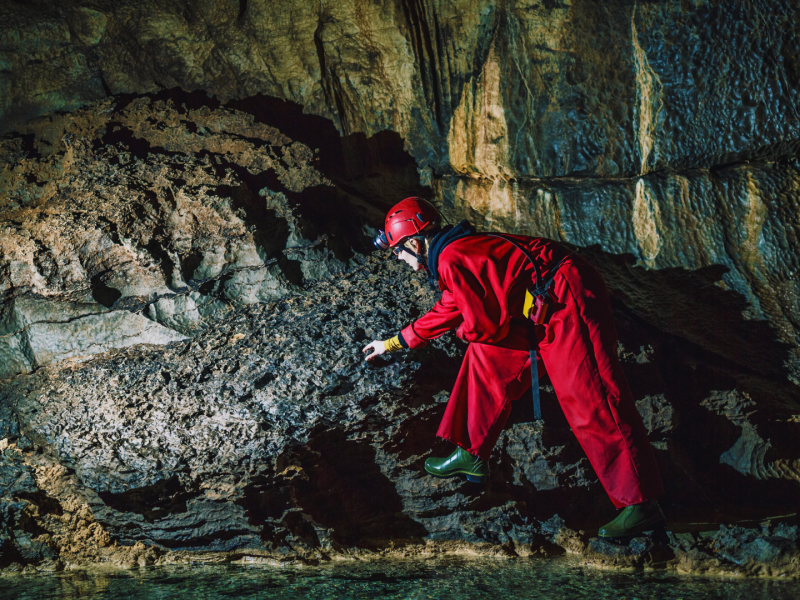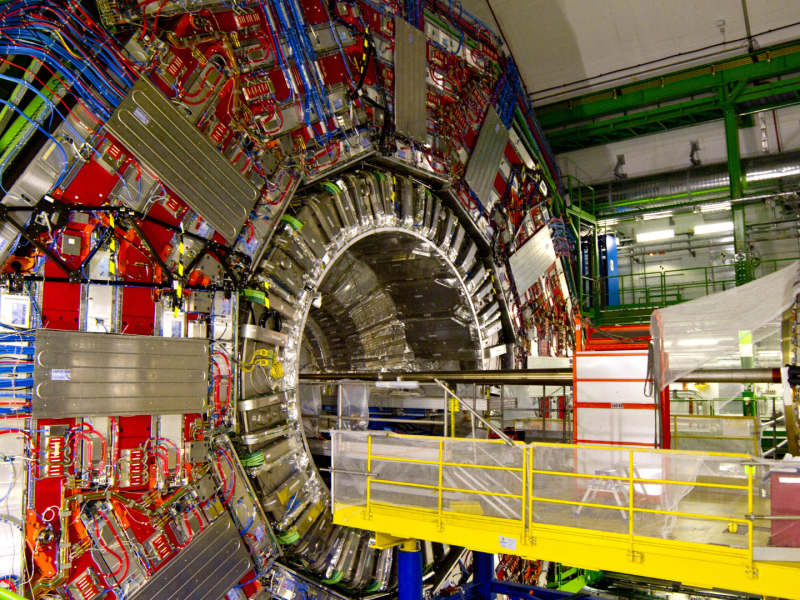

Throughout history, exploration has led to remarkable scientific discoveries that have shaped human understanding of the world. From the depths of the ocean to the far reaches of space, explorers have uncovered phenomena that challenge existing theories and expand knowledge. Many famous scientific breakthroughs emerged from these adventurous quests, revealing the power of curiosity and exploration.
The spirits of adventure and inquiry have often gone hand in hand, as explorers faced the unknown and made observations that paved the way for significant advancements. Each expedition not only sought new land but also unraveled mysteries of biology, chemistry, and physics. The intersection of exploration and science reveals a narrative where physical journeys result in profound intellectual discoveries.
As readers traverse through this blog post, they will encounter stories of renowned discoveries that arose under the banner of exploration. From the discovery of new species to groundbreaking insights in geology, these tales highlight the intrinsic link between exploration and scientific progress.
Transformative Discoveries Fueled by Scientific Exploration
Scientific exploration has led to profound discoveries that have reshaped our understanding of life, health, and disease. The examples that follow highlight pivotal moments when exploration yielded transformative ideas and solutions that continue to impact society.
The Theory of Evolution and Natural Selection
Charles Darwin formulated the theory of evolution through natural selection during his voyage on the HMS Beagle in the 1830s. His observations in the Galápagos Islands were crucial, as he studied variations among species, particularly finches.
Darwin proposed that organisms adapt to their environments over generations, leading to the survival of the fittest. This concept, which challenged existing scientific beliefs, established a foundation for modern biology.
The implications of Darwin’s work are vast, influencing genetics, ecology, and conservation by explaining the interconnectedness of species and their environments. His theory continues to be validated through extensive research and exploration.
Discovery of Penicillin and the Age of Antibiotics
In 1928, Alexander Fleming made a groundbreaking discovery when he noticed that mold (Penicillium notatum) inhibited bacterial growth in his laboratory. This marked the inception of antibiotics, a major advancement in medical treatment.
Penicillin became the first widely used antibiotic, effectively combating bacterial infections that were often fatal before its introduction. Fleming’s exploration of natural microorganisms led to significant improvements in public health.
Subsequent research expanded the range of antibiotics, saving countless lives and transforming the treatment of infections. Fleming’s discovery exemplifies how scientific exploration can lead to practical solutions to global health crises.
Unlocking the Structure of DNA
Friedrich Miescher first identified DNA in 1869, but its structure remained a mystery until the early 1950s. James Watson and Francis Crick, building on the X-ray diffraction images created by Rosalind Franklin, uncovered the double helix structure of DNA in 1953.
This discovery provided crucial insights into genetic coding and hereditary traits. It fundamentally altered the biological sciences, laying the groundwork for molecular biology and genetics.
Understanding DNA enabled advancements in fields such as forensics, biotechnology, and medicine. It illustrated how exploration, combined with interdisciplinary collaboration, can lead to revolutionary scientific breakthroughs.
The Advent of Vaccines and Disease Prevention
Edward Jenner introduced the first vaccine in 1796, using cowpox to immunize against smallpox. This discovery marked the beginning of immunology by demonstrating how exposure to a milder disease could prevent more devastating infections.
With the development of germ theory by Louis Pasteur and Robert Koch in the late 19th century, the scientific community gained a clearer understanding of microorganisms and their role in disease.
This knowledge facilitated the creation of various vaccines that have eradicated or controlled diseases such as polio, measles, and hepatitis. The impact of vaccination programs continues to be felt worldwide, significantly reducing mortality and morbidity.
Pioneering Explorers and Their Impact on Science
Explorers have played a crucial role in expanding scientific knowledge through their journeys. Their discoveries often opened new avenues for research, leading to foundational advancements in various fields.
Explorations of Charles Darwin in the Galapagos
Charles Darwin’s voyage to the Galapagos Islands in 1835 significantly contributed to the theory of evolution. Observing diverse species such as finches and tortoises, he noted distinct variations related to their environments. This led him to formulate ideas about natural selection. The adaptations observed in these species provided critical evidence supporting Darwin’s groundbreaking conclusions regarding evolution. His work eventually culminated in the publication of “On the Origin of Species” in 1859, which transformed biological sciences.
Ibn Battuta and Early Documentation of Global Diversity
Ibn Battuta, a 14th-century Moroccan explorer, traveled extensively across Africa, Asia, and Europe. His detailed accounts in “Rihla” (The Journey) provided invaluable insights into the cultures, societies, and geographies of the regions he visited. Battuta’s observations on trade, governance, and daily life enhanced the understanding of global diversity at the time. His writings helped bridge cultural gaps and established a foundation for later ethnographic studies, influencing both geography and anthropology.
Marco Polo and the Broader Understanding of Asia
Marco Polo’s journey to Asia in the late 13th century expanded European knowledge of the continent. His detailed accounts of China, India, and the Silk Road highlighted the wealth and sophistication of Asian civilizations. Polo’s writings introduced new products, technologies, and cultures to Europe, stimulating interest in trade and exploration. His narratives facilitated a shift in perspectives, encouraging others to undertake their explorations and further broaden Europe’s understanding of the world.
Arctic and Polar Discoveries
Arctic exploration, particularly during the 19th and early 20th centuries, yielded significant scientific insights. Explorers such as Robert Peary and Ernest Shackleton contributed to understanding the harsh polar environment, geography, and potential resources. Their expeditions provided data on climate, ice formations, and wildlife, enhancing knowledge of Earth’s extremes. Discovering the North Pole helped validate theories on navigation and geography, sparking further interest in the study of polar regions and their ecosystems.
Groundbreaking Advances in Physics and Chemistry
Exploration has led to significant advancements in both physics and chemistry, reshaping scientific understanding. These discoveries touch on fundamental forces, the structure of matter, and the very nature of the universe.
Unveiling the Laws of Motion and Gravity
Isaac Newton’s work laid the groundwork for classical mechanics. His three laws of motion describe how objects behave when they are in motion or at rest. His law of universal gravitation explains how every mass attracts others, establishing the foundation for understanding gravity.
In the 20th century, Albert Einstein expanded upon these concepts. His theory of relativity provided a new perspective on gravity, describing it as the curvature of spacetime caused by mass. This radical shift informed both cosmology and quantum mechanics, influencing modern physics profoundly.
The Structure of the Universe and Cosmological Discoveries
The field of cosmology has evolved dramatically, particularly with the introduction of the Big Bang theory. This model explains the universe’s origins approximately 13.8 billion years ago. Observations of cosmic microwave background radiation offer evidence supporting this theory, revealing the early universe’s conditions.
Einstein’s theories allowed scientists to understand cosmic phenomena such as black holes and the expansion of the universe. Advances in telescope technology have facilitated closer examination of galaxies, enhancing knowledge of the universe’s structure and composition.
Discoveries in Electricity and Magnetism
Electricity and magnetism were propelled into modern science by pioneers like William Gilbert and Benjamin Franklin. Gilbert’s work in magnetism established foundational principles, while Franklin’s famous kite experiment demonstrated electrical properties and led to understanding lightning’s nature.
Nikola Tesla’s innovations on alternating current revolutionized electrical systems. His contributions enabled long-distance electricity distribution, influencing power grids worldwide. Each discovery brought humanity closer to harnessing these essential forces.
Classification of Elements and the Periodic Table
Dmitri Mendeleev’s periodic table fundamentally changed the field of chemistry. By organizing elements based on atomic mass and properties, he predicted undiscovered elements. His work provided clarity on element classification, paving the way for future research.
Elements are grouped in the periodic table according to their chemical properties. These classifications help chemists predict reactions and understand the relationships between different elements. The table remains a crucial tool for studying chemistry today, influencing how students and professionals approach the discipline.
Revolutionary Contributions from Modern Scientific Exploration
Modern scientific exploration has led to groundbreaking advancements, particularly in genetics and our understanding of the cosmos. Significant contributions have emerged from initiatives focused on genetic manipulation and space exploration, unveiling new insights and technologies.
Genetics and CRISPR Technologies
CRISPR technology represents a pivotal advancement in genetics. Developed by scientists including Emmanuelle Charpentier, this system allows for precise editing of DNA sequences within organisms, paving the way for targeted therapies and crop improvements.
The technology works by utilizing a guide RNA to direct the Cas9 enzyme to specific locations in the genome. Benefits of CRISPR include its ability to potentially eradicate genetic disorders and its applications in agricultural biotechnology.
Key points on CRISPR:
- Precision: Allows for targeted modifications.
- Versatility: Applicable in various fields, from medicine to agriculture.
- Potential: Holds promise for eradicating diseases.
Scientific Discoveries from Space and Polar Missions
Scientific exploration beyond Earth has revolutionized our understanding of the universe. Space missions have revealed previously unknown aspects of astronomy, physics, and planetary sciences. Data from missions like the Mars Rover has uncovered details about the planet’s geology and climate, hinting at past life.
Polar missions, such as studying ice cores, provide insights into climate change, capturing historical climate data. They demonstrate the intricate relationship between Earth’s past changes and current global warming trends.
Highlights from space and polar missions include:
- Mars Sample Return: Analyzing Martian soil.
- Ice Core Studies: Understanding climatic shifts.
- Astronomical Observations: Expanding knowledge of stellar systems.
These contributions reflect the vital role of exploration in advancing scientific knowledge.